

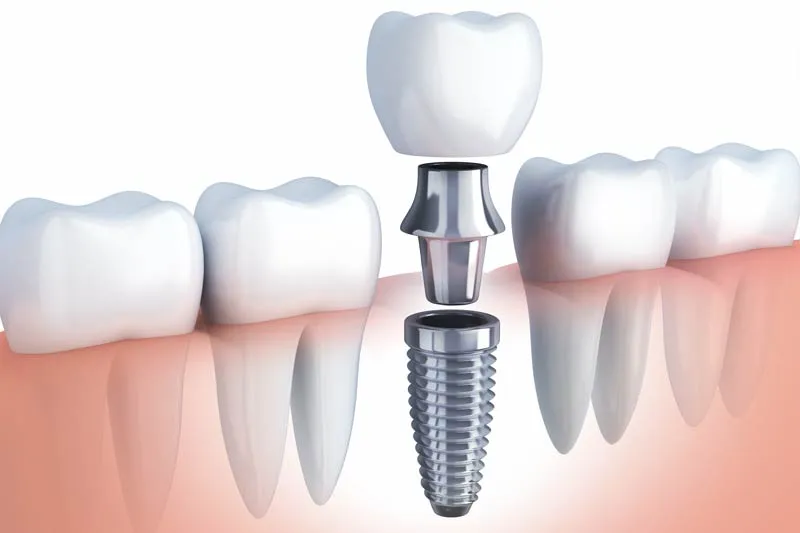
Many patients with diabetes wonder whether dental implants are possible. In many cases they can be, but planning has to account for healing, infection risk, gum health, and overall medical control.
The safest answer comes from evaluating the patient's mouth and health history together.
Why diabetes matters for implant planning
Poorly controlled blood sugar can affect healing and infection risk. Gum disease is also more common and can affect both natural teeth and implants.
This does not automatically rule out treatment, but it does mean the dentist needs to plan carefully.
What Dr. Sran evaluates
The consultation may include bone evaluation, gum measurements, dental infection screening, hygiene review, medication history, and discussion of medical stability.
If gum disease or infection is active, those problems may need to be treated before implant placement.
Maintenance after treatment
Implants need maintenance. Cleanings, home care, gum monitoring, and medical control all support long-term success.
Astra Dental can help patients with diabetes understand whether implants are appropriate and what steps may improve predictability.
How this fits into implant planning at Astra Dental
Patients from Stratford, Bridgeport, Fairfield, Trumbull, Shelton, Milford, and Monroe often come in after hearing several different opinions about implants. The most useful visit starts with diagnosis, not a pre-written plan.
Diabetes does not automatically rule out dental implants, but healing, gum health, infection control, and medical stability matter.
Astra Dental reviews gum disease, active infection, bone support, oral hygiene, medical history, medications, and whether blood sugar control is stable enough for predictable healing.
What an implant-focused visit should cover
A real implant visit should connect the surgical side and the tooth-design side. The implant has to heal in bone, but it also has to support a crown, bridge, denture, or full-arch prosthesis that fits the patient's bite and smile.
Patients should leave understanding the likely sequence, whether a temporary tooth is possible, what the final restoration may be, and what maintenance will look like after treatment.
For more complex implant cases, planning may also include CBCT imaging, intraoral scanning, facial scanning, printed models, surgical guide planning, and in-house temporary or ceramic workflows. The technology is there to make the treatment path clearer, not to rush the patient into one option.
- Review of X-rays or 3D imaging when needed
- Digital planning with scanners, photos, and bite information
- Discussion of bone grafting, gum shape, and healing time
- Comparison of implant and non-implant alternatives
- Clear explanation of temporary and final tooth options
Questions patients should ask
A stronger dental plan usually starts with better questions.
- Is my diabetes controlled enough for surgical healing?
- Do I have gum disease that should be treated first?
- Will I need antibiotics or medical clearance?
- How often should implants be maintained after treatment?
Details that can change the recommendation
Poorly controlled diabetes can increase infection risk and slow healing.
Gum disease control is important before and after implant placement.
Maintenance visits help monitor inflammation, bite forces, and cleaning around implants.
Common patient questions
Is my diabetes controlled enough for surgical healing?
The answer depends on the exam, X-rays or 3D imaging, bone support, infection history, and the final tooth design. Astra Dental checks these details before recommending a specific implant path.
Do I have gum disease that should be treated first?
If this concern affects your case, Dr. Sran will explain whether it changes timing, temporary tooth options, grafting needs, or the final restoration. The goal is to make the tradeoffs easy to understand before treatment begins.
Will I need antibiotics or medical clearance?
Implant treatment can be very predictable when the diagnosis, surgical plan, restoration design, and maintenance plan all work together. Skipping one of those steps is where patients can run into surprises.
How often should implants be maintained after treatment?
A consultation is the right time to compare implants with bridges, dentures, partials, root canal treatment, or staged care. Sometimes the best plan is an implant; sometimes the best plan is saving the tooth or preparing the site first.
Long-term success depends on more than placing the implant
Dental implants need maintenance just like natural teeth need maintenance. The bite, cleaning access, gum health, medical history, and design of the restoration all affect how the result holds up over time.
That is why Astra Dental talks about the final tooth early. A well-planned implant should be placed where the final restoration needs support, not just where bone happens to be available.
When to schedule an implant consultation
It is worth scheduling a consultation if a tooth is missing, loose, cracked below the gumline, repeatedly infected, uncomfortable under a denture, or no longer restorable. The sooner the area is evaluated, the easier it is to understand bone support, temporary tooth options, and whether grafting may be needed.
Patients do not need to know the perfect treatment before calling. The purpose of the visit is to compare options and build a plan around health, comfort, timing, appearance, and budget.
Helpful next pages
Patients comparing options can also review Dental Implants, All-on-X Dental Implants, Bone Grafting, Same Day Teeth.